

Tyres and Wheel Alignment in Devon
Your tyres are the only part of the car touching the road. Automaster at Longcombe Cross near Totnes helps South Devon drivers with tyres, punctures, alignment and balancing.
Good tyres matter more than most drivers realise. They decide how far the car takes to stop, how it grips on wet Devon lanes and how steady it feels at speed. This page explains what we can help with: new tyres and fitting, puncture repairs, wheel alignment and tracking, and wheel balancing.
Automaster is an independent garage at Longcombe Cross, near Totnes, and we look after drivers across South Devon. Whether you commute, drive down narrow lanes or carry a full car in summer, the same basics apply. Here is how to judge your tyres, and what to tell us when you ask for a quote.
When do I need new tyres and tyre fitting?
The legal minimum tread depth for cars in the UK is 1.6 mm across the central three quarters of the tread, around the whole circumference. Many drivers choose to replace tyres before they reach that point, because grip in the wet falls away as tread wears. Look for the tread wear bars in the grooves, and check for any uneven wear.
Condition is not only about tread. Check the sidewalls for bulges, cuts, cracking or exposed cord, all of which make a tyre unsafe whatever the tread depth. Age matters too: rubber hardens over time, so an old tyre with plenty of tread can still be past its best. The date code on the sidewall tells you when it was made.
To quote for new tyres we need the size printed on the sidewall, such as the width, profile and rim size, plus the speed and load rating if you can read them. Your registration, make and model also help us check what suits the car. Tyres on the same axle should match, and mixing different types across a car can affect handling, so tell us what is currently fitted.
- Check tread depth across the whole width
- Look for bulges, cuts or cracks in the sidewall
- Check the age code, not just the tread
- Note the full size marked on the tyre
Can a puncture be repaired?
Often, yes, but not always. A puncture in the central tread area, from a nail or screw for example, can usually be repaired properly from the inside of the tyre, once it has been removed from the wheel and inspected. A quick plug from the outside alone is not a proper repair.
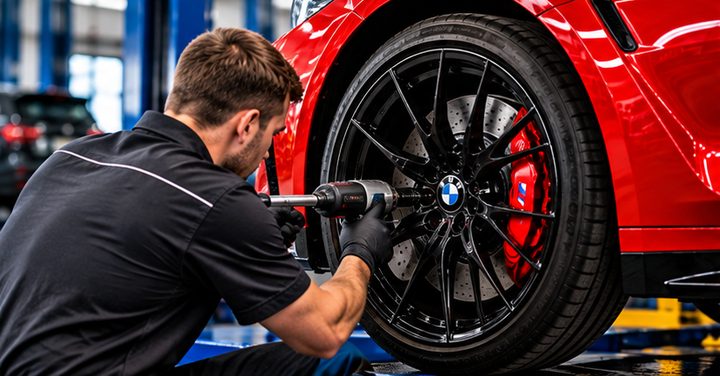
A puncture cannot be repaired if the damage is in the sidewall or the shoulder of the tyre, if the hole is too large, if the tyre has been driven on while flat, or if there is internal damage. In those cases the tyre has to be replaced. Whether yours can be saved is only clear after we inspect it, so please do not keep driving on a flat tyre, as that is often what turns a repair into a replacement.
What is wheel alignment and tracking, and do I need it?
Wheel alignment, often called tracking, means setting the angles of the wheels so they point the right way and run straight together. If they drift out of line, you may notice the car pulling to one side, a steering wheel that sits off-centre when driving straight, or tyres wearing on one edge.
Knocks from potholes and kerbs, worn suspension or steering parts, and changes to ride height can all upset alignment. It is sensible to have it checked after fitting new tyres if you have noticed any of these signs, and after suspension or steering repairs. Misalignment wears tyres quickly, so it can cost you more in the long run than the check itself. If worn parts are found, those will need attention first, and we will explain this when we inspect.
Why do wheels need balancing?
Tyre and wheel assemblies are never perfectly even in weight. Balancing adds small weights to the rim so the wheel spins smoothly. An unbalanced wheel typically causes a vibration through the steering wheel or the seat at certain speeds, often noticeable on faster roads, and it can wear tyres and suspension parts.
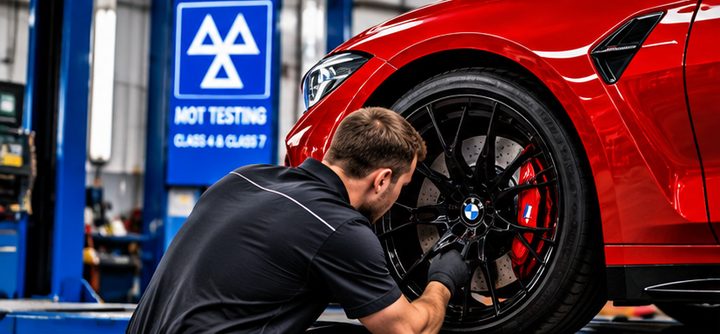
Balancing is normally done whenever a tyre is fitted. If you pick up a new vibration later, it could be a lost weight, a bent wheel, a bulge in a tyre or a worn suspension part. Tell us the speed at which it appears and whether you feel it in the wheel or the seat, and we will work out the cause.
Check your tyres for tread, cuts, bulges and age, and do not ignore pulling or vibration. Ask Automaster for a quote with your tyre size to hand.
Tyre Fitting by town
- Tyre Fitting in Totnes
- Tyre Fitting in Dartington
- Tyre Fitting in Buckfastleigh
- Tyre Fitting in Buckfast
- Tyre Fitting in Deancombe
- Tyre Fitting in Holne
- Tyre Fitting in South Brent
- Tyre Fitting in Ivybridge
- Tyre Fitting in Ermington
- Tyre Fitting in Modbury
- Tyre Fitting in Kingston
- Tyre Fitting in Bigbury
- Tyre Fitting in Ringmore
- Tyre Fitting in Bantham
- Tyre Fitting in Thurlestone
- Tyre Fitting in Kingsbridge
- Tyre Fitting in Salcombe
- Tyre Fitting in Loddiswell
- Tyre Fitting in Hazelwood
- Tyre Fitting in Dartmouth
- Tyre Fitting in Churston
- Tyre Fitting in Brixham
- Tyre Fitting in Paignton
- Tyre Fitting in Torbay
- Tyre Fitting in St Marychurch
- Tyre Fitting in Ellacombe
- Tyre Fitting in Stoke-in-Teignhead
- Tyre Fitting in Teignmouth
- Tyre Fitting in Dawlish
- Tyre Fitting in Newton Abbot
- Tyre Fitting in Milber
- Tyre Fitting in Abbotskerswell
- Tyre Fitting in Bickington
- Tyre Fitting in Liverton
- Tyre Fitting in Heathfield
- Tyre Fitting in Hexworth
- Tyre Fitting in Caton
- Tyre Fitting in South Knighton
- Tyre Fitting in Pounds Gate
- Tyre Fitting in Pear Tree
Advice: tyre fitting
- Tyre tread depth and the legal limit
- How to read tyre age and date codes
- When can a puncture be repaired?
- Signs you need wheel alignment
- Wheel balancing and steering wheel vibration
- Why are my tyres wearing unevenly?
- Why do tyre pressures matter?
- Is it safe to drive with a bulge or cut in the tyre sidewall?
- Do I need to rotate and match my tyres?
- How do I choose the right tyres for my car?
Frequently asked questions
How do I check my tyre tread depth?
Look at the tread wear bars in the main grooves, or use a tread depth gauge. The legal minimum is 1.6 mm across the central three quarters of the tread. Many drivers replace tyres sooner for better wet grip.
Should I replace tyres in pairs?
Tyres on the same axle should match in type and should wear evenly, so pairs are the usual advice. What suits your car depends on the vehicle and the condition of the existing tyres, so ask us.
Can any puncture be repaired?
No. Damage to the sidewall or shoulder, large holes and tyres driven on while flat generally cannot be repaired. We need to inspect the tyre off the wheel before we can say.
What are the signs I need alignment or balancing?
Pulling to one side, an off-centre steering wheel and uneven tyre wear point to alignment. Vibration at certain speeds points to balancing. The two can be checked together.
What do I need to tell you for a tyre quote?
The tyre size from the sidewall, your registration, and what you want fitted. Please do not assume we hold particular tyres, as we will confirm what is available when we quote.
Ask for a quote
Tell us the make, model, registration and what the car is doing, and we will come back to you. Prefer to talk? Call our quote line on 01803 862152.
Automaster, Longcombe Cross, Longcombe, Totnes TQ9 6PL, United Kingdom