

Why do tyre pressures matter?
Correct pressure keeps the tyre the right shape on the road, which affects grip, braking, wear and fuel use more than most drivers expect.
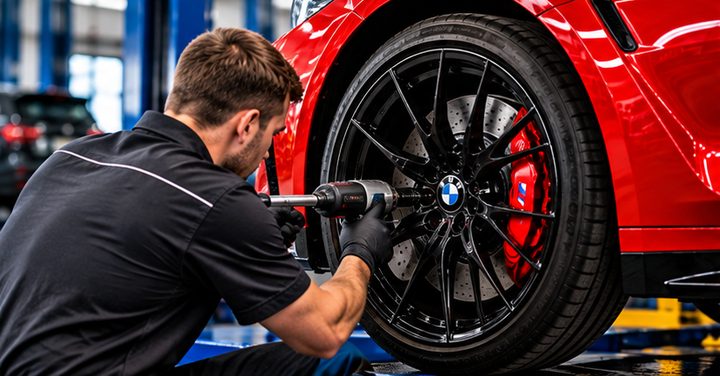
Tyre pressures matter because the air inside the tyre, not the rubber, carries the weight of your car. Too low and the tyre flexes and overheats; too high and less of the tread touches the road. Either way, grip, braking, tyre life and fuel use all suffer.
Checking takes about five minutes at a forecourt or with a home pump. Below we cover where to find the right figure, how to check properly, and what to do when a tyre keeps losing air.
Where do I find the correct tyre pressure for my car?
The figure is set by the car manufacturer, not by the tyre maker, and it is normally listed in the handbook. Many cars also carry a label on the driver's door frame, inside the fuel flap or on the door pillar. It depends on the vehicle, so check your handbook if the label is missing.
You may see different figures for the front and rear, and separate values for normal and heavily loaded use, such as a full car with luggage. Use the loaded figure when you are carrying a family and holiday gear. The number on the tyre sidewall is the tyre's maximum, not the recommended pressure.
How do I check my tyre pressures properly?
Check when the tyres are cold, ideally before you have driven more than a short distance. Driving warms the air and raises the reading, so a forecourt gauge after a long run will show a higher figure that gives a false picture.
- Remove the valve cap and press the gauge on firmly for a steady reading
- Check all four tyres, as they rarely lose air at the same rate
- Do not forget the spare if your car has one
- Refit every valve cap, as it keeps dirt out of the valve
- Adjust to the handbook figure, letting air out if a tyre is too high
What happens if my tyres are under or over inflated?
An under-inflated tyre has a softer sidewall, runs hotter, wears on both shoulders and increases fuel use. It can feel vague in corners and take longer to stop. In serious cases heat build-up can lead to a failure at speed, which is why a low tyre should never be ignored.
An over-inflated tyre wears down the centre of the tread, rides more harshly and can reduce grip, particularly on wet or cold roads. More air is not safer; the right figure is the one the manufacturer chose for your car.
Why does my tyre keep losing pressure?
Small natural losses happen over weeks, and temperature changes shift readings too. Winter mornings often show lower figures than summer afternoons. But a tyre that needs air every few days has a problem.
The common causes are a nail or screw in the tread, a worn or leaking valve, a corroded wheel rim where the tyre seats, or a slow leak from damage. A garage can check by inspecting the tyre off the wheel where needed. Not every puncture can be repaired, and it depends on where the damage sits and how bad it is.
When should I stop driving and get a tyre looked at?
Stop if a tyre is flat or very low, if you hear a flapping sound, or if the car begins to pull or wander. Driving on a flat tyre can ruin the sidewall and damage the wheel.
If your car has a tyre pressure warning light, treat it as a prompt to check all four tyres. If the light comes back after you have corrected the pressures, there may be a fault with a sensor or a slow leak that needs diagnosing.
Five minutes with a gauge each month protects your grip, your tyres and your fuel use. If a tyre keeps going down, ask Automaster at Longcombe Cross for a quote and we will inspect it.
Common questions
How often should I check my tyre pressures?
Once a month is a sensible habit, and also before a long journey or when carrying a heavy load. Seasonal temperature drops can lower pressures without any leak.
Is nitrogen better than normal air?
Air is mostly nitrogen already. Some people choose nitrogen to reduce small pressure changes, but the most important thing is checking regularly, whichever you use.
Do I need different pressures for winter?
Not usually. You should keep to the manufacturer's figure, checking it cold, because temperature drops will naturally lower the reading.
Can a garage check my pressures for me?
Yes. If you are unsure, ask when the car is in for other work, or let us know when you request a quote and we can look at the tyres and valves as part of the visit.
More advice
Ask for a quote
Tell us the make, model, registration and what the car is doing, and we will come back to you. Prefer to talk? Call our quote line on 01803 862152.
Automaster, Longcombe Cross, Longcombe, Totnes TQ9 6PL, United Kingdom