

Is it safe to drive with a bulge or cut in the tyre sidewall?
A bulge or a deep cut in the sidewall means the tyre's structure has been damaged, and it should not be treated as a minor cosmetic fault.
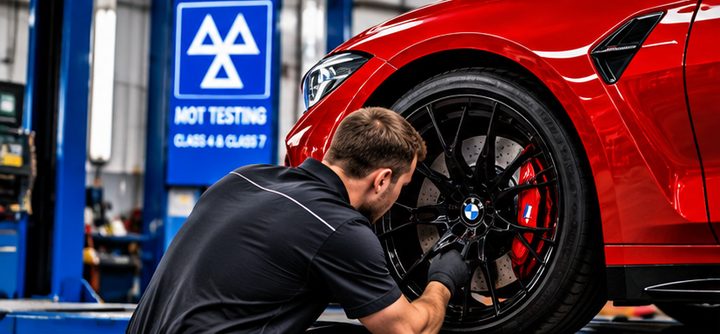
No, a bulge in a tyre sidewall is not safe to drive on. The sidewall has no steel belts under it like the tread does, so a bulge means the inner cords have broken and the tyre is being held together by little more than the outer rubber. It can fail suddenly.
Cuts and scuffs are less clear-cut, because depth is what matters. Here is how to tell the difference, what causes the damage, and what the next step looks like when you contact a garage such as Automaster.
What causes a bulge on the side of a tyre?
The usual cause is an impact. Clipping a kerb, hitting a pothole at speed or striking a sharp edge can pinch the sidewall between the road and the wheel rim, breaking the internal cords. Air pressure then pushes the weakened area outwards into a lump.
A bulge may not appear straight away. Sometimes it develops days or weeks after the knock, which is why it is worth checking the tyres after any hard impact. Low pressure makes pinching more likely.
How do I check a tyre sidewall safely?
Park on level ground with the engine off and the handbrake on. Turn the steering to full lock so you can see the front sidewalls, and use a torch. Run your hand gently over the surface only if you are certain the car is secure.
Look at both sides of each tyre, including the inner sidewalls that face the engine bay or exhaust, which are hard to see from outside.
- Bubbles, lumps or an egg-shaped bulge
- Cuts or splits deeper than a surface scratch
- Any cord, fabric or thread showing through the rubber
- Cracking around the base of the sidewall
- Marks where the tyre has rubbed against the kerb
Is a cut in the tyre sidewall an MOT failure?
It can be. In an MOT, a cut deep enough to reach the cord, a bulge, or any sign of the structure showing is a failure. A shallow scuff that only marks the surface may be acceptable, though the tester decides at the time.
Because the sidewall flexes constantly, even a small cut can grow. Tyres with sidewall damage cannot normally be repaired in the way a tread puncture sometimes can, so you should expect replacement to be the answer, subject to inspection.
Can a damaged sidewall be repaired?
Generally not. Repairs are limited to certain areas of the tread, and the sidewall is not one of them because of the way it flexes. A garage will inspect the tyre off the car if necessary and advise on replacement.
Cost drivers include the tyre size, whether it is on a pair or on all four, and whether the wheel or suspension also took damage in the same impact. It is worth checking the alloy wheel too, as the rim can bend, which can cause a slow leak.
What should I do if I find a bulge while driving or at home?
If you notice it on the road, slow down gently, pull over somewhere safe and avoid motorway speeds. Fit the spare only if you are confident and the spare itself is in good condition and correctly inflated. Otherwise seek help.
At home, do not use the car until the tyre has been looked at. A bulge can burst without warning, and the loss of control that follows is the real danger. Call us, describe where it is and how big, and ask for a quote to replace the tyre.
Treat a bulge or deep cut as a reason to stop driving on that tyre. Tell Automaster what you can see and ask for a quote, and we will inspect the tyre before advising.
Common questions
Can I drive a short distance with a bulge?
We would advise against it. The tyre can fail at any speed and with no warning. It is safer to fit the spare or arrange another way to get the car to a garage.
Does a small scratch on the sidewall matter?
Light scuffs on the surface are common and usually harmless. If the mark is deep, if you can see fabric or cord, or if the area is raised, have it looked at.
Should I replace one tyre or a pair?
It depends on the vehicle and the condition of the other tyre on the same axle. Ask us when you request a quote, and tell us the tread depth if you know it.
How can I avoid sidewall damage?
Keep pressures correct, take care near kerbs, and slow down for potholes where it is safe to do so. Low pressure makes a tyre more vulnerable to impact damage.
More advice
Ask for a quote
Tell us the make, model, registration and what the car is doing, and we will come back to you. Prefer to talk? Call our quote line on 01803 862152.
Automaster, Longcombe Cross, Longcombe, Totnes TQ9 6PL, United Kingdom