

Car Diagnostics and Auto Electrics in Devon
Warning lights, flat batteries and electrical gremlins are our everyday work. Automaster at Longcombe Cross near Totnes helps drivers across South Devon find the real fault.
Modern cars rely on sensors, computers and a lot of wiring. When something fails, the dashboard may light up, the car may refuse to start, or a feature may simply stop working. Finding the real cause takes both the right equipment and experience.
Automaster is an independent garage at Longcombe Cross, near Totnes, and we look after drivers across South Devon. Below we explain our diagnostic and auto electrical work in plain English, covering petrol and diesel cars, and what to tell us when you ask for a quote.
What does a car diagnostic scan actually do?
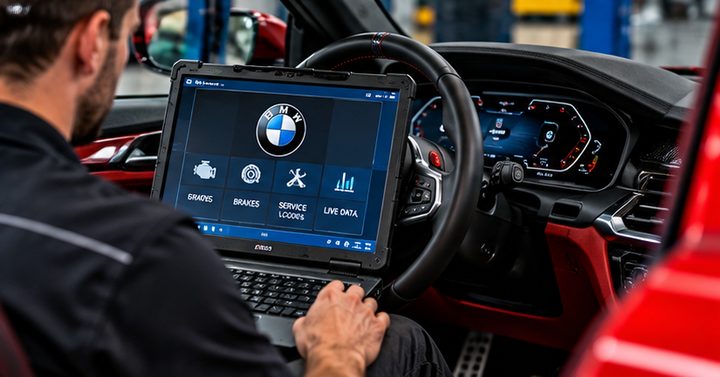
A scan connects to the car and reads the fault codes stored by its control units, plus live data from sensors. It is a very good starting point, but it is not a parts list. A code usually points to a circuit or a system, such as a sensor reading outside its range, and the cause might be the sensor, its wiring, a connector or something else upstream.
So after the scan we test, rather than guessing and swapping parts. Full vehicle diagnostics covers all the systems we can reach, and warning light diagnostics focuses on the light that is on. Tell us which lights are showing, whether they are steady or flashing, and what the car is doing, such as running rough or losing power.
- Which warning lights are showing
- Steady or flashing
- When it started
- Any change in how the car drives
What do the common warning lights mean?
An amber engine management light means the engine control unit has logged a fault, ranging from a minor sensor to something affecting emissions. A flashing engine light is more urgent, often a misfire, and driving on can damage the catalytic converter. A red oil pressure or temperature light means stop as soon as it is safe.
The battery light points to a charging fault. The ABS, airbag and power steering lights relate to those systems. If a red light appears, or the car feels unsafe, please do not carry on driving. Lights vary by manufacturer, so your handbook is a good place to check the symbol.
How do you find electrical faults and wiring problems?
Electrical faults can be stubborn. Water getting into connectors, chafed wires, corroded earths and failing relays can cause problems that come and go, for example a light that works only some days. Intermittent faults take time because we need the fault to show itself while we test.
Cost drivers here are mostly time, access and how easily the fault can be reproduced. Tell us exactly what happens, when it happens (cold, wet, over bumps, after a long drive) and whether any accessories have been fitted, and we can plan the investigation and quote.
When do sensors need replacing?
Sensors feed the engine and other systems information about temperature, air flow, speed, position and exhaust gases. When one fails, symptoms include poor fuel economy, rough idling, hesitation, a warning light or an MOT emissions fail.
We check the sensor, its wiring and connector before replacing it, because a good sensor is often blamed for a wiring fault. The right part depends on your vehicle.
Alarms, immobilisers and car battery problems
If the car will not start and the key seems to be ignored, an immobiliser fault may be involved. Alarms that go off by themselves, or central locking that misbehaves, often come down to a sensor, a low battery or a wiring fault. For a flat battery, we test whether the battery is faulty, whether something is draining it when parked, and whether the alternator is charging it.
Alternators recharge the battery while you drive. Signs of a failing one include a battery light, dim headlights, a battery that keeps going flat and electrical items acting oddly. A starter motor fault typically shows as a click, a slow crank or nothing at all when you turn the key. Short trips and cold mornings are hard on batteries, so tell us the age of the battery if you know it.
Reversing cameras and parking sensors
Parking sensors fail from damaged wiring, moisture in the sensor or a fault in the control unit. Reversing cameras can show a blank, flickering or blurred picture because of a damaged cable, a poor connection or the camera itself. Tell us which sensor or camera is affected and what you see, and we can inspect and quote.
Do not ignore warning lights or electrical faults. Tell Automaster what you have noticed and ask for a quote so we can find the real cause.
Car Diagnostics by town
- Car Diagnostics in Totnes
- Car Diagnostics in Dartington
- Car Diagnostics in Buckfastleigh
- Car Diagnostics in Buckfast
- Car Diagnostics in Deancombe
- Car Diagnostics in Holne
- Car Diagnostics in South Brent
- Car Diagnostics in Ivybridge
- Car Diagnostics in Ermington
- Car Diagnostics in Modbury
- Car Diagnostics in Kingston
- Car Diagnostics in Bigbury
- Car Diagnostics in Ringmore
- Car Diagnostics in Bantham
- Car Diagnostics in Thurlestone
- Car Diagnostics in Kingsbridge
- Car Diagnostics in Salcombe
- Car Diagnostics in Loddiswell
- Car Diagnostics in Hazelwood
- Car Diagnostics in Dartmouth
- Car Diagnostics in Churston
- Car Diagnostics in Brixham
- Car Diagnostics in Paignton
- Car Diagnostics in Torbay
- Car Diagnostics in St Marychurch
- Car Diagnostics in Ellacombe
- Car Diagnostics in Stoke-in-Teignhead
- Car Diagnostics in Teignmouth
- Car Diagnostics in Dawlish
- Car Diagnostics in Newton Abbot
- Car Diagnostics in Milber
- Car Diagnostics in Abbotskerswell
- Car Diagnostics in Bickington
- Car Diagnostics in Liverton
- Car Diagnostics in Heathfield
- Car Diagnostics in Hexworth
- Car Diagnostics in Caton
- Car Diagnostics in South Knighton
- Car Diagnostics in Pounds Gate
- Car Diagnostics in Pear Tree
Advice: car diagnostics
- Engine management light: what it means and what to do
- What can a diagnostic scan tell you about your car?
- How do you know if your car battery is failing?
- Alternator failure: symptoms, causes and what to do
- Starter motor problems: why does my car just click?
- Car Won't Start: A Checklist of Causes and What to Check
- Intermittent Electrical Faults Explained
- Immobiliser and Key Problems: Why Your Car Won't Recognise the Key
- Parking Sensor and Reversing Camera Faults: Causes and Fixes
- What Do the Common Dashboard Warning Lights Mean?
Frequently asked questions
Will a scan tell you exactly what is wrong?
Not always. It tells us which system logged a fault, and we then test to find the actual cause. That avoids replacing parts that were fine.
Why is an electrical fault taking so long to find?
Intermittent faults only appear sometimes, so we must catch them in the act. Wiring and connectors can take time to trace.
My car will not start. Is it the battery?
Often it is, but it could be the starter motor, the alternator not charging, or an immobiliser fault. Tell us what you hear when you turn the key.
Is it safe to drive with the engine light on?
If it is steady and the car drives normally, you can usually get it checked soon. If it flashes, or the car loses power, stop and call us.
Do you cover drivers beyond Totnes?
Yes. Automaster is at Longcombe Cross near Totnes and we cover drivers across South Devon.
Ask for a quote
Tell us the make, model, registration and what the car is doing, and we will come back to you. Prefer to talk? Call our quote line on 01803 862152.
Automaster, Longcombe Cross, Longcombe, Totnes TQ9 6PL, United Kingdom