

Starter motor problems: why does my car just click?
A single click or fast clicking when you turn the key is usually down to low battery power or a poor connection, but a worn starter motor can behave the same way.
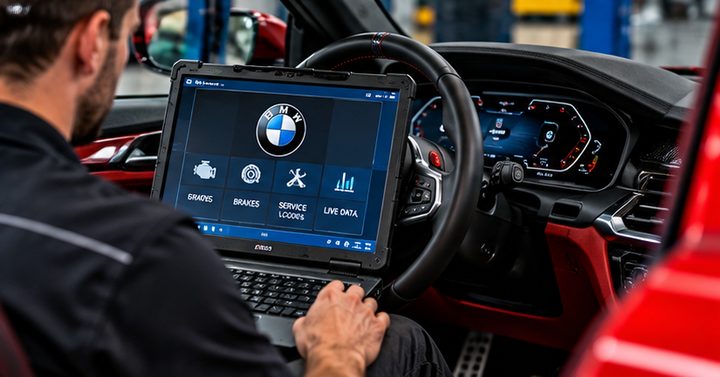
When you turn the key or press the start button and hear clicking rather than the engine turning, the starting circuit is not getting what it needs. It might be a battery that is too weak, a loose terminal, a faulty starter solenoid or a worn starter motor.
The sound itself gives useful clues. This guide explains what different noises mean, what you can safely check before calling for help, and how a garage separates a starter fault from a battery or wiring fault.
Why does my car click but not start?
A rapid series of clicks usually means the battery does not have enough power to turn the engine, so the starter solenoid engages and drops out again repeatedly. Check whether the dashboard lights dim or go out when you turn the key, which supports a battery or connection problem.
A single, firm click with bright dashboard lights is more suggestive of a starter fault: the solenoid is operating but the motor is not turning. Worn internal parts or a poor electrical feed to the starter are the usual explanations.
- Rapid clicking: often a weak battery or loose terminal
- Single click, lights stay bright: starter or solenoid suspect
- Nothing at all: may be the ignition switch, fuse, clutch switch or security system
- Whirring with no engine turning: starter not engaging with the flywheel
- Grinding after the engine fires: starter not disengaging or worn teeth
What can I check myself first?
Start with the battery, because it is the most likely cause. Look at the terminals for looseness or corrosion, and see whether the headlights are bright and steady with the engine off. If the lights are weak, the battery needs charging or testing.
On a manual car, make sure the clutch pedal is fully pressed, as a switch on the pedal can prevent starting, and that the gear lever is in neutral. Check whether a security or immobiliser light is flashing on the dashboard. Avoid repeatedly trying to start the engine, as the starter can overheat.
Can a bump start get me going?
On some manual cars it is possible to start the engine by rolling the car and releasing the clutch in gear, but it depends on the vehicle and is not something to rely on. It needs a clear, safe space and can put strain on parts of the engine, so check your handbook first, as some manufacturers advise against it.
It is also a temporary measure: if the cause is a weak battery or a charging fault, the problem will return. A bump start also does nothing for a car that will not start because of a security or fuel supply fault.
How does a garage diagnose a starter motor problem?
The first job is testing the battery under load, then checking the voltage drop across the cables and earth connections while the starter is operated. This shows whether current is reaching the starter or being lost along the way. The starter feed, solenoid and relays are then checked.
If the starter itself is at fault, it is usually replaced, and sometimes a reconditioned unit is an option depending on the vehicle. Access varies a great deal: some starters are easy to reach while others sit under other components. At Automaster, a garage at Longcombe Cross near Totnes, we confirm the cause before any part is ordered. Cost depends on the vehicle, how long the job takes and the part itself, so ask for a quote, and we do not promise a repair until we have inspected the car.
When should I stop trying to start the car?
Stop if you smell burning or see smoke from under the bonnet. A starter that is stuck on, or a short circuit in the cabling, can overheat quickly. Do not keep cranking in the hope it catches, as it can drain the battery fully and damage the starter.
If the starter grinds loudly after the engine is running, switch off and do not carry on driving until it has been checked. If you are in a place where the car is not safe to leave, such as on a bend or busy road, switch on the hazard lights if you can and get yourself to safety first.
Clicking at the key is a message from the starting circuit, and the pattern of clicks helps tell a weak battery from a failing starter. Ask Automaster for a quote or call the quote line.
Common questions
Is it the starter or the battery if the car clicks?
Fast clicking with dimming lights usually points to the battery or its connections. A single click with bright lights leans towards the starter, but a test is the only reliable way to tell.
Can a starter motor work intermittently?
Yes. Worn contacts or a failing solenoid can cause a starter to work on some attempts and not others, which can be confusing. It is likely to fail completely eventually.
Does tapping the starter motor help?
It sometimes frees a worn starter for one more start, but it is not a repair and is not safe to do with the engine bay hot or running. Treat it as a sign the starter needs inspection.
Will a jump start work if the starter is faulty?
Only if the real problem is a weak battery. A faulty starter will still fail, so if a jump start makes no difference, the cause is probably elsewhere.
More advice
Ask for a quote
Tell us the make, model, registration and what the car is doing, and we will come back to you. Prefer to talk? Call our quote line on 01803 862152.
Automaster, Longcombe Cross, Longcombe, Totnes TQ9 6PL, United Kingdom