

How do I choose the right tyres for my car?
Start with the size printed on your current tyres, then match load and speed ratings and choose a type that suits how and where you drive.
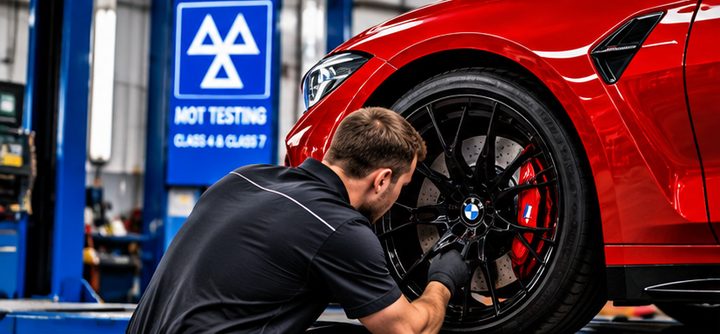
To choose the right tyres, begin with the size marked on the sidewall of your current ones, or listed in your handbook, then keep to the same load index and speed rating or higher. From there the choice is about the sort of driving you do and how much you drive.
The markings look cryptic at first, but they follow a pattern. This guide decodes them, explains what else to consider, and sets out what to tell Automaster, a garage at Longcombe Cross near Totnes, when you ask for a quote.
What do the numbers on my tyre sidewall mean?
A typical marking reads something like 205/55 R16 91V. The first number is the width in millimetres, the second is the sidewall height as a proportion of the width, R means radial construction, and 16 is the rim diameter in inches. The last two items are the load index and speed rating.
The load index shows how much weight each tyre can carry, and the letter shows the top speed it is rated for. Your car needs tyres at least equal to the figures in the handbook. Using a lower rating is not safe, and the details depend on the vehicle.
Which type of tyre suits the way I drive?
Summer tyres give good grip in warm and wet conditions but harden in the cold. Winter tyres stay supple at low temperatures. All-season tyres try to cover the year and carry a mountain-and-snowflake mark if they meet the winter standard.
For most UK drivers who cover typical local mileage, a sound all-round tyre that suits the car is a reasonable starting point. If you drive on steep, narrow, wet lanes or carry loads regularly, say so when you ask, as it can shape the advice.
- Annual mileage and mostly short trips or long runs
- Wet-weather grip and braking
- Road noise and ride comfort
- Wear rate, if you cover high mileage
- Whether the car carries heavy loads or a towbar
What is the tyre label and is it worth reading?
Most new car tyres sold in the UK carry a label showing ratings for fuel efficiency, wet grip and external noise. Wet grip is arguably the one that matters most for safety, because it influences stopping distance on a damp road.
Lower rolling resistance may save fuel over time, but ratings are only one guide. Use the label to compare similar tyres in the same size, and remember that real-world results depend on your driving and your tyre pressures.
Should I buy premium, mid-range or budget tyres?
Tyres are the only part of the car in contact with the road, and the difference between ranges can show in wet braking, noise and wear. Cost drivers are the size, the brand range, the speed rating and the number of tyres you need.
It is not necessary to buy the most expensive, but we would suggest avoiding unknown makes without any information on their performance. Ask us what we can supply for your car and compare the options when you request a quote.
What should I check before buying tyres?
Check the age of the tyres you plan to fit. A four-digit code on the sidewall gives the week and year of manufacture, such as 2524 for the 25th week of 2024. Rubber hardens with age, so very old stock is not ideal even if unused.
Fitting also includes new valves where needed, balancing the wheels and disposal of the old tyres. If the existing ones wore unevenly, ask about alignment and suspension checks. Please give us your registration, the size from the sidewall and your driving pattern.
Get the size, load index and speed rating right first, then choose the type that suits your driving. Ask Automaster for a quote and send us the markings from your sidewall.
Common questions
Can I fit a different size to the original?
Sometimes, but it depends on the vehicle. Changes can affect the speedometer, clearance and handling, so check your handbook and ask us before changing size.
Do I need to replace all four at once?
Not always. Replacing a pair on the same axle is common. If the car is four-wheel drive, the handbook may require all four to be of similar wear.
How long do tyres last?
It depends on mileage, driving style, pressures and alignment. Rather than a fixed age, check the tread, condition and age code regularly.
Do I need winter tyres in Devon?
They are not required by law in the UK. Whether they suit you depends on where and when you drive, and many drivers manage well with a good all-round tyre.
More advice
Ask for a quote
Tell us the make, model, registration and what the car is doing, and we will come back to you. Prefer to talk? Call our quote line on 01803 862152.
Automaster, Longcombe Cross, Longcombe, Totnes TQ9 6PL, United Kingdom