

Do I need to rotate and match my tyres?
Rotation can even out wear on some cars, while matching tyres on the same axle matters for stability and handling on every car.
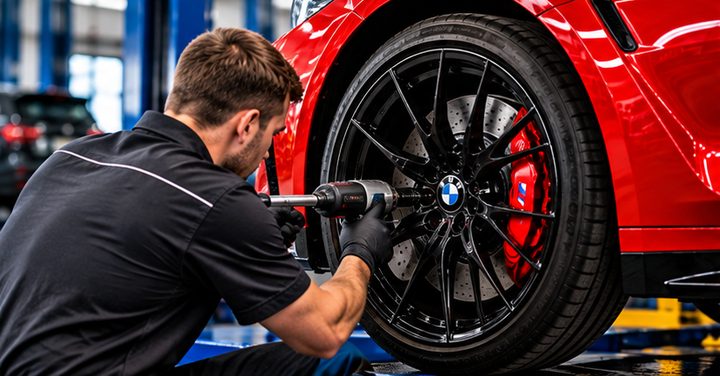
Rotating tyres is optional on many cars, but matching them is something to take seriously. Tyres on the same axle should be the same size and type, and with similar tread depth, so the car steers, brakes and grips predictably.
People often ask about both at the same time, so this guide takes them in turn: why the front tyres usually wear faster, when rotation helps, and how mixing tyres can affect the way the car behaves.
Why do my front tyres wear faster than the rear?
On a front-wheel-drive car the front tyres steer, drive and take most of the braking load, so they wear faster. Rear-wheel-drive cars can show a different balance, with the rear tyres working harder under power.
Which axle wears faster also depends on how you drive, the load you carry and the state of the suspension and alignment, so the picture varies from car to car.
Should I rotate my tyres, and how often?
Some manufacturers recommend rotation at set intervals, and others do not mention it at all, so check your handbook. Where it is advised, swapping tyres between axles helps to even out the wear, so the full set reaches the end of its life at a similar time.
Do not rotate to hide a problem. If one tyre is wearing oddly, the cause needs to be found first. Directional tyres, marked with an arrow on the sidewall, must keep turning the correct way, so they can only move front to back on the same side.
- Check the handbook for any rotation advice
- Look for arrows showing the rolling direction
- Have wheel nuts or bolts tightened to the correct torque
- Check pressures after any move, as front and rear figures may differ
Do all four tyres have to be the same make?
There is no rule that all four must be the same brand, but tyres on the same axle should match in make, model, size and speed rating. Different patterns on one axle can grip differently, particularly in the wet, and can make the car feel unsettled under braking.
Between the front and rear axles, mixing is possible but not ideal, and it depends on the vehicle. Some four-wheel-drive cars are sensitive to differences in rolling circumference, so a mismatch could stress the drivetrain. Check your handbook, or ask us.
Where should new tyres go if I only buy two?
When fitting a pair, the usual advice is to put the new tyres on the rear axle, whichever wheels drive the car. The reason is stability. If the rear tyres have less grip than the fronts, the back of the car can step out in a corner or under braking in the wet, which is harder to control.
Fitting new tyres at the front on a front-wheel-drive car is tempting because they wear faster there, but the safer arrangement is still the better tread at the back. A garage can look at the actual tread depths before advising.
How much difference in tread depth is acceptable?
There is no single legal figure for the difference between tyres, but a large gap on one axle can cause the car to pull or behave unevenly, and some four-wheel-drive systems object to it. The legal minimum for any tyre remains 1.6 mm in the central three quarters of the tread.
If you are unsure, bring the car in for a look. We can measure all four tyres, check the ages and condition, and suggest a sensible combination. Please tell us the size on the sidewall when you ask for a quote.
Match tyres on each axle and put the better tread at the rear when buying two. Ask Automaster for a quote and we will measure the tyres you have before suggesting a plan.
Common questions
Is it illegal to mix tyre brands?
No, mixing brands is not illegal in itself. However, tyres on the same axle should be of the same size and type, and radial and cross-ply tyres must not be mixed in an unsafe way.
Does rotating tyres affect my manufacturer's cover?
Check your handbook and any paperwork from the manufacturer. We cannot speak for every maker, so rely on their written advice.
Can I rotate tyres myself?
It is possible with the right jack, axle stands and a torque wrench, but wheel fixings must be tightened correctly. Many drivers prefer to have it done in a garage.
Do I need to match the spare too?
A temporary spare is only for short, slow trips. A full-size spare should match your road tyres in size and rating, and its age matters as much as its tread.
More advice
Ask for a quote
Tell us the make, model, registration and what the car is doing, and we will come back to you. Prefer to talk? Call our quote line on 01803 862152.
Automaster, Longcombe Cross, Longcombe, Totnes TQ9 6PL, United Kingdom