

What is the clunking noise from my suspension?
A clunk or knock over bumps usually means a worn bush, link, joint or mount, and it should be inspected because some of those parts affect steering control.
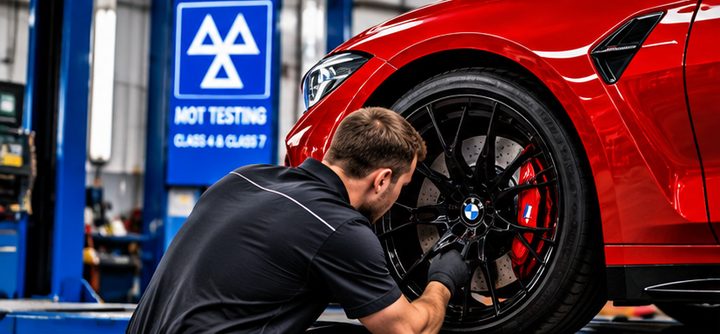
A clunking or knocking noise over bumps and potholes almost always means something in the suspension or steering has worn enough to move where it should be firm. The usual suspects are anti-roll bar drop links, rubber bushes, strut top mounts, ball joints and track rod ends.
Some of these are minor annoyances and some are safety items, and from the driver's seat they can sound much the same. That is why a new knock deserves an inspection rather than a wait-and-see approach.
Which parts usually cause a clunk over bumps?
Rubber and metal parts wear with mileage, with potholes, and with age as rubber hardens and cracks. The most common sources are listed below, although the exact set depends on the vehicle.
- Anti-roll bar drop links, which often rattle on small bumps.
- Bushes in wishbones, control arms or the anti-roll bar that have split or perished.
- Strut top mounts and bearings, which can knock when turning or going over a hump.
- Ball joints and track rod ends, which can clunk and also loosen steering feel.
- Shock absorber mountings, or in rarer cases a broken coil spring.
Does the type of noise help me work out the cause?
A little. A light rattle on rough surfaces often suggests drop links. A deeper thud as the suspension drops again can suggest a bush or a shock absorber mounting. A knock when you turn the wheel at low speed, such as on a car park, can point to a top mount or a steering joint.
Treat these as clues, not a diagnosis. Noises travel through the body and the same sound can come from several places, so a front-left clunk may actually start at the rear or in the exhaust. A garage can reproduce the movement on a lift, which is far more reliable than listening from the driver's seat.
What can I check safely before booking?
Start with the simple things. Loose items in the boot, a worn roof rack, a loose heat shield or an exhaust mount can all mimic suspension noise. Check your tyre pressures too, as very low pressures change how bumps feel. It also helps to notice whether the noise is worse when the car is loaded with passengers or luggage, because that can point to a spring or a mounting under strain.
Then note when the noise happens: over speed bumps, when turning, when braking or only when the car is cold. Writing that down helps a garage a great deal. Do not get under a car supported only by a jack.
What does a garage do about suspension knocks?
A garage will usually lift the car and check for play in joints and bushes, look at the springs and dampers for damage or leaks, and examine mounts for movement. Worn parts are normally replaced rather than adjusted.
Cost drivers include how many parts are worn, how easy they are to reach, whether parts must be replaced in pairs across an axle, and whether alignment needs rechecking afterwards. Excessive wear in suspension and steering parts can also be an MOT failure.
When should I stop driving?
Stop and get the car looked at if the clunk comes with vague or wandering steering, a wheel that feels loose, a car that leans or sits lower on one corner, or noise that is getting louder quickly. A broken spring or failing joint can affect control.
If the car feels normal and the noise is only occasional, you may be able to drive carefully to a garage, but avoid motorways and rough roads until it has been inspected.
A suspension knock is a sign that a part has loosened or worn, and it is much easier to deal with early. Ask Automaster for a quote or call the quote line, and tell us when the noise happens.
Common questions
Is a clunk always expensive to fix?
No. A drop link can be a small job, while a failed joint or several worn bushes takes more time. It depends on the vehicle and on what the inspection finds.
Can a clunk fail an MOT?
Yes, excessive wear or play in suspension and steering components can lead to a fail or an advisory, depending on how severe it is.
Why does it only clunk when the weather is cold?
Rubber stiffens in the cold, and worn parts can knock more until things warm up. It does not mean the fault will go away.
Can bad shock absorbers cause knocking?
They can, either from worn mountings or from a failed internal part. A garage can check for leaks, damage and movement. Knocking from a corner is worth reporting early, because a loose mounting can damage other parts.
More advice
Ask for a quote
Tell us the make, model, registration and what the car is doing, and we will come back to you. Prefer to talk? Call our quote line on 01803 862152.
Automaster, Longcombe Cross, Longcombe, Totnes TQ9 6PL, United Kingdom