

What are the signs your brake pads need replacing?
Squealing, grinding, a pull to one side or a brake warning light are the usual signs that brake pads are worn and need looking at.
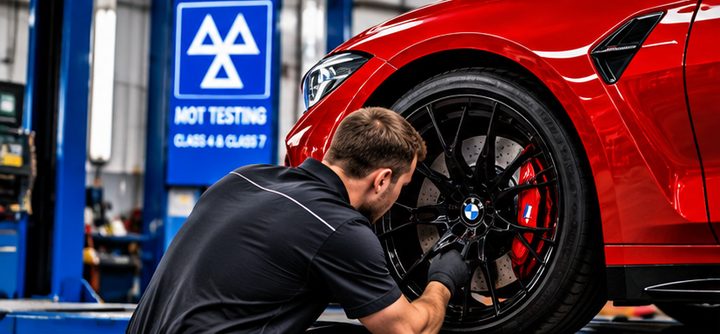
The most common signs are a high-pitched squeal when you brake, a harsh grinding noise, a pedal that feels different, the car taking longer to stop, or a warning light on the dashboard. Any one of these is a reason to have the brakes looked at soon rather than leaving them for the next service.
Brake pads are designed to wear away. They are the friction material that clamps against the discs every time you slow down, so they are a consumable part. How quickly they wear depends on how and where you drive, how heavily the car is loaded and the type of pad fitted. This guide covers what to listen and feel for, what you can check safely yourself and when a car should stay parked.
Why do my brakes squeal when I slow down?
Many pads have a small metal tab built in as a wear indicator. When the friction material gets low, the tab touches the disc and makes a thin, high-pitched squeal that usually goes away when you press harder or release the pedal. That noise is an early warning and the pads are nearing the end of their life.
Squealing is not always wear, though, as damp-night rust or new pads bedding in can cause short-lived noise. If the sound is there every time you brake, and it has been getting louder over a few weeks, treat it as wear until an inspection says otherwise.
What does grinding when I brake mean?
A deep, rough grinding or growling sound usually means the friction material has gone altogether and the metal backing plate is rubbing on the disc. This damages the disc quickly and reduces braking performance, so the job becomes larger and more involved the longer it is left.
Grinding can also come from a stone trapped behind the disc shield or a seized caliper, so the cause needs confirming by looking at the wheel rather than guessing.
- A scraping noise that stays constant while the wheel turns, even off the brakes
- Visible grooves or a sharp lip on the disc edge
- A burning smell after a normal drive
- One wheel noticeably hotter than the others
How can I tell if my brake pads are worn by feel and sight?
The car may pull to one side when you brake, the pedal may travel further down before it bites, or the steering wheel may shake under braking. Some cars have a dashboard light linked to a pad wear sensor, and in others a general brake warning light comes on. Your handbook will tell you what the symbols mean for your vehicle.
Safe checks you can do yourself are simple. With the car parked on level ground and cool, look through the wheel spokes at the pad and disc, if your wheel design allows it. A thin strip of friction material, or none at all, is a reason to book an inspection. You cannot see the inner pad on most cars, so a clear look from the outside does not prove that both pads are fine.
What does a garage do when brake pads are worn?
The wheels come off so the pads, discs, calipers, slider pins, hoses and fluid can be inspected properly. Pads are normally replaced as a set across an axle, so the left and right sides wear and brake evenly. The discs are measured and judged for wear, scoring and condition, and the garage will advise whether they can stay or should be changed with the pads.
Cost depends on the make and model, whether front or rear pads are involved, whether discs need replacing too, and whether any caliper parts are seized or damaged.
When should I stop driving with worn brake pads?
Stop driving if you hear continuous grinding, the pedal sinks towards the floor, the car pulls hard to one side, or a red brake warning light comes on and stays on. Pull over somewhere safe and seek advice.
If the signs are milder, such as an occasional squeal, keep your speed down, leave larger gaps and book an inspection promptly. Worn brakes also fail the MOT, so it is better to catch them before the test date.
Squeals, grinding, a longer stopping distance or a warning light mean it is time for an inspection. Ask Automaster for a quote or call our quote line and we will look at the brakes with you.
Common questions
How long do brake pads usually last?
There is no single figure. It depends on the vehicle, the pad type, your driving style and the roads you use. Frequent hard braking, heavy loads and stop-start traffic wear pads faster, so check the service schedule in your handbook and have them inspected at each service.
Can I replace only one brake pad?
No. Pads are changed in pairs on each side of the same axle so braking stays balanced. Fitting one side alone could make the car pull when you brake.
Do worn brake pads fail an MOT?
They can. Brakes are tested for efficiency and condition, and the tester will fail pads that are worn down too far or friction material that is missing. Having them inspected before the test avoids a surprise.
Should I replace discs at the same time as pads?
Not always. The discs are measured and examined during the job. If they are below the minimum thickness, badly scored or uneven, they should be changed with the pads. Otherwise they may be reusable.
More advice
Ask for a quote
Tell us the make, model, registration and what the car is doing, and we will come back to you. Prefer to talk? Call our quote line on 01803 862152.
Automaster, Longcombe Cross, Longcombe, Totnes TQ9 6PL, United Kingdom