

Why Does My Clutch Judder When I Pull Away?
Judder as you release the pedal is usually down to an uneven grip between the clutch plate and flywheel, and it rarely cures itself.
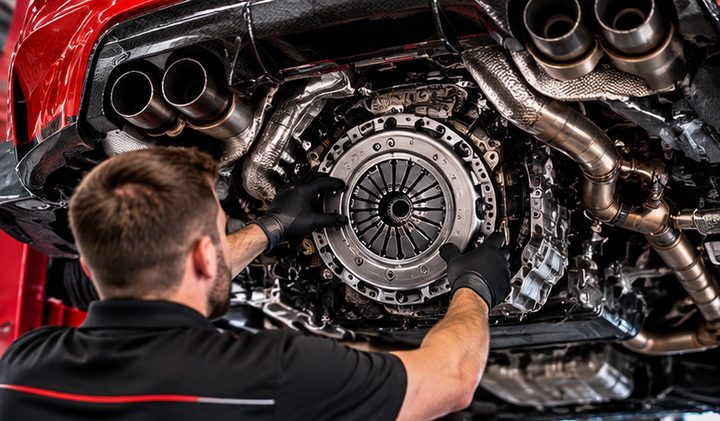
A clutch that shudders or shakes as you pull away is normally gripping unevenly instead of smoothly. The usual reasons are oil or grease on the friction surface, a flywheel that is no longer flat, a worn or glazed clutch plate, or engine and gearbox mounts that have worn and let the drivetrain move about.
Because several different faults produce the same shudder, guessing can mean paying for the wrong part. This guide explains how each cause tends to feel, what you can safely notice for yourself, and what a garage does to tell them apart.
What actually causes clutch judder?
When you release the pedal, the friction plate should clamp against the flywheel evenly all the way round. Anything that makes that grip patchy turns a smooth start into a series of grabs and slips, which you feel as shaking through the pedal, the floor or the whole car.
The most common culprits are a contaminated plate, hot spots or scoring on the flywheel face, a plate worn unevenly, and a pressure plate that has weakened. On some cars, particularly many diesels, a dual-mass flywheel that has worn can also cause shudder and rattle.
- Oil or grease on the friction surface
- Scored or heat-marked flywheel
- Unevenly worn or glazed clutch plate
- Weak or damaged pressure plate
- Worn dual-mass flywheel on cars that have one
Can oil leaks or worn engine mounts make a clutch shake?
Yes to both. Oil from a leaking crankshaft seal or gearbox input shaft seal can reach the clutch and leave a film that makes it grab. Fitting a new clutch without dealing with the leak simply contaminates the new one, so a leak should be traced and fixed as part of the job.
Worn engine or gearbox mounts are the look-alike. If the mounts let the engine rock when the clutch bites, you get a thump or shudder even though the clutch itself may be fine. That is why a proper inspection matters before any parts are ordered.
What can I check safely at home?
You can learn a lot without lifting the bonnet. Notice when the judder happens and whether it changes with the weather, how long you have driven, or whether the clutch has been working hard in traffic or on hills. Write down what you find so you can describe it clearly when you ask for a quote.
Keep checks to things you can do on level ground with the engine off and the handbrake on. Never put your hands near moving parts, and do not try to inspect underneath the car without it being properly supported.
- Does it judder only when cold, or only when hot?
- Is it worse in first and reverse than in higher gears?
- Can you smell burning or see oil spots where you park?
- Does the pedal feel different from normal?
- Does the car also rattle at idle?
What will a garage do about clutch judder?
The clutch cannot usually be judged fully without separating the engine and gearbox, so a firm answer sometimes only comes once it is apart.
If the clutch plate, pressure plate and flywheel are worn or contaminated, they are normally replaced or the flywheel is assessed for refacing or replacement, depending on the vehicle. Cost depends on the make, how hard the gearbox is to reach, whether a dual-mass flywheel is fitted and whether a leak also needs sorting. We cannot promise a repair until the car has been inspected.
When should I stop driving with a juddering clutch?
Mild judder on pulling away can be driven to a garage with care. Stop if the clutch starts to slip badly, the pedal goes soft or sinks, you struggle to select gears, or you notice burning smells or a grinding noise. Any of these can leave you stuck in traffic.
Avoid pulling away on steep hills or with a heavy load while the fault is present, because that makes the damage worse and the final repair larger.
Judder is a symptom with several possible causes, so it is worth having it looked at before it turns into a bigger repair. Automaster is a garage at Longcombe Cross near Totnes; ask us for a quote or call the quote line and describe what you feel.
Common questions
Why does my clutch judder only when it is cold?
Cold judder often points to a contaminated surface or a worn flywheel that settles once heat expands the parts. It still needs checking, because the fault tends to get worse over time.
Is clutch judder dangerous?
The judder itself is mainly a nuisance, but it can be a sign of a clutch that is failing. If it begins to slip or will not disengage cleanly, stop driving and get advice.
Can a new clutch still judder?
It can if an oil leak, a worn flywheel or failing mounts were not dealt with at the same time. That is why the cause should be found before parts are fitted.
Will changing my driving style cure it?
Smoother starts reduce the strain, but a mechanical cause will not go away on its own. A proper inspection is the only reliable way to know.
More advice
Ask for a quote
Tell us the make, model, registration and what the car is doing, and we will come back to you. Prefer to talk? Call our quote line on 01803 862152.
Automaster, Longcombe Cross, Longcombe, Totnes TQ9 6PL, United Kingdom