

Catalytic converter failure: how to spot it
A failing catalytic converter often shows up as lost power, a warning light, an unusual smell or a rattle from underneath, and an emissions failure at the MOT.
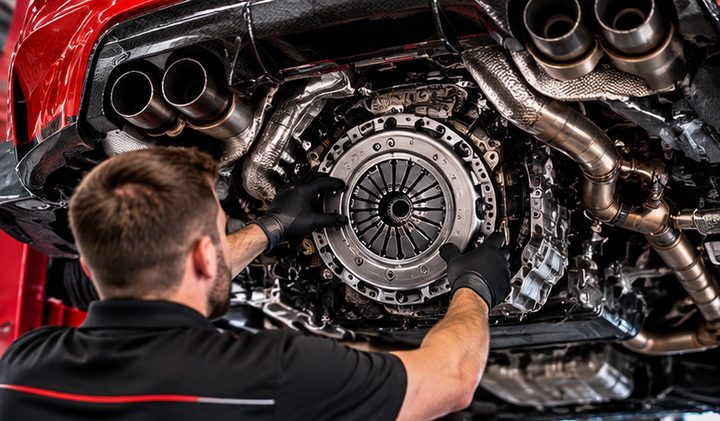
The usual signs of a failing catalytic converter are a warning light, a drop in power or fuel economy, a rattle from underneath the car and a failed emissions test. Several of these symptoms overlap with other faults, so a proper diagnosis matters before anything is replaced, and the cost of a replacement unit can vary a great deal between vehicles.
The converter itself rarely fails for no reason. More often something else damages it, so finding the cause is as important as dealing with the part.
What are the signs of a bad catalytic converter?
The symptoms depend on whether the converter is worn, contaminated or physically blocked. A partly blocked unit restricts the exhaust, so the engine struggles to breathe.
Not all of these signs mean the converter is at fault. A misfire, a faulty oxygen sensor or an exhaust leak can look very similar.
- Engine management warning light on
- Reduced power, especially going uphill or accelerating
- Rattling from under the car, which can be a broken internal honeycomb
- A smell like rotten eggs from the exhaust
- Higher fuel use or a hesitant, rough-running engine
What causes a catalytic converter to fail?
Converters operate at very high temperatures, and age takes its toll. But a failure before its time usually points to something upstream. Unburnt fuel from a misfiring cylinder can overheat and melt the internal structure.
Oil or coolant entering the exhaust can coat the surfaces so they stop working. A knock from a speed bump or rough ground can also crack the ceramic inside, and the pieces then rattle or block the flow.
Can I check anything myself?
You can note when the symptoms happen and write down any warning lights, as that helps a lot. Check the oil and coolant levels, because unexplained loss can mean the engine is feeding the exhaust. Listen for a rattle when the engine is idling and cold.
Do not touch the exhaust when it is hot, and do not crawl under a car supported only by a jack. The exhaust runs hot enough to burn, so wait until it has cooled.
How does a garage diagnose it?
We read the fault codes, look at live data from the sensors before and after the converter, and inspect the exhaust for damage and leaks. We also look for the original cause, such as a misfire or an oil-burning problem.
If the converter needs replacing, the cost depends on the vehicle and the type of unit that fits it. If the cause is not fixed first, a new converter can fail the same way.
Is it safe to keep driving with a failing catalytic converter?
A mild fault may allow short-term driving, but a blocked or overheating converter can cause loss of power, damage the engine and, in extreme cases, become a heat risk underneath the car. If you smell burning or the car struggles to keep moving, stop somewhere safe.
Get it checked promptly, and do not put it off until the MOT. A converter that is starved of airflow can also make the engine run hotter and use more fuel, so waiting often makes the eventual repair larger rather than smaller. If you also notice a misfire, a flashing engine light or a smell of unburnt fuel, treat that as more urgent and avoid long journeys until it has been inspected.
A failing catalytic converter is usually a symptom of another problem, so diagnosis comes first. Automaster is at Longcombe Cross near Totnes, and you are welcome to ask for a quote or call the quote line.
Common questions
Will a failing catalytic converter fail the MOT?
It can. The MOT includes an emissions test, and a converter that is not working will often push readings out of limits. The test also checks that the part has not been removed.
Can a catalytic converter be cleaned?
Sometimes carbon deposits can be reduced, but a melted or broken unit cannot be cleaned. We would have to inspect it before saying either way.
Do diesels have catalytic converters?
Yes, diesel cars have one as part of the exhaust, along with a particulate filter on many models. Both petrol and diesel cars are affected by the same kinds of causes.
What should I tell you when I ask for a quote?
Tell us the make, model and year, what symptoms you have noticed and whether any lights are on. That helps us explain what to expect before we inspect it.
More advice
Ask for a quote
Tell us the make, model, registration and what the car is doing, and we will come back to you. Prefer to talk? Call our quote line on 01803 862152.
Automaster, Longcombe Cross, Longcombe, Totnes TQ9 6PL, United Kingdom