

Clutch or gearbox: which one is causing my problem?
If the engine revs rise without the car keeping pace, suspect the clutch; if noise or crunching follows the gears themselves, the gearbox is more likely.
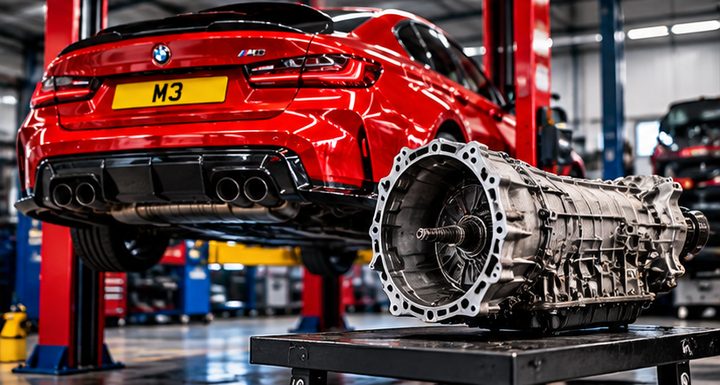
Clutch and gearbox faults feel alike from the driver's seat, yet they are different parts with different repairs. The clutch connects and disconnects the engine from the gearbox. The gearbox itself holds the gears and shafts.
A few careful observations can often tell you which one to suspect. This is a guide only, because a hydraulic fault, a worn linkage or a mounting can mimic either.
What are the signs of a clutch problem?
Clutch faults usually involve the pedal or the way drive is taken up. Watch for slipping, where revs rise but speed does not follow, especially in higher gears or going uphill. Judder when pulling away, a pedal that feels heavy, spongy or sticks to the floor, and a high or very low biting point all suggest the clutch or its hydraulics.
A smell like burning can mean the clutch is slipping, and it needs attention rather than patience.
Because the clutch is a wearing part, it can fail gradually. Early slipping that only shows on hills or when the car is heavily loaded is still worth checking before it worsens.
- Revs rising with little acceleration
- Juddering on pulling away
- Spongy pedal or pedal that sticks
- Difficulty selecting gears with pedal pressed
What are the signs of a gearbox problem?
Gearbox faults tend to be tied to the gears themselves. A whine that changes with road speed, a crunch when you select a particular gear, a gear that will not stay engaged, or difficulty finding gears even with a normally working clutch all point inside the box.
A notchy, stiff gear lever may involve the linkage or cables, which is less serious than internal damage.
What simple test can I do at home?
With the car safely stationary, handbrake on and engine running, press the clutch fully down and try selecting each gear. If a gear will not go in cleanly only when the engine is running, but goes in easily with the engine off, the clutch may not be disengaging fully.
Another observation is noise: if a rattle or whirr disappears when you press the clutch pedal, that suggests the gearbox input side or a clutch part, while a noise that appears when you press may point to the release bearing. Do not try tests that involve moving the car on a road if you feel unsure.
What does a garage do to tell them apart?
We would check the clutch hydraulics or cable, the pedal travel, the gearbox oil, and the driveshafts and mounts. Sometimes both parts are affected at once.
We cannot say which repair is needed before inspection. Cost drivers include the labour to remove the gearbox, whether the flywheel needs attention and the parts involved. A clutch job and a gearbox repair can overlap, so a proper diagnosis avoids paying for the wrong thing.
When should I stop driving?
Stop if the car will not select a gear, the clutch pedal goes to the floor and stays there, or the car cannot pull away. These faults can leave you stuck in traffic or unable to stop.
Heavy slipping, grinding or burning smells are also reasons to have it looked at promptly instead of carrying on.
If you cannot tell which part is at fault, that is normal. A short description of what you notice and when is enough for us to begin working it out.
Pedal feel and slipping point to the clutch, while noise or crunching in specific gears points to the gearbox. If you are unsure, ask Automaster at Longcombe Cross near Totnes for a quote or call the quote line.
Common questions
Can a clutch problem damage the gearbox?
A failing clutch left too long can damage the flywheel and surrounding parts. Gearbox harm is less common but possible if gears are forced.
Why is my clutch pedal sinking to the floor?
This commonly points to a hydraulic leak or a failed master or slave cylinder, or a cable fault. It needs inspection.
Is a crunchy gear always the gearbox?
Not always. If the clutch does not release fully, gears can crunch too. A check will show which.
What should I tell you when I ask for a quote?
Give us the make, model and registration, plus what you feel, when it happens and any warning lights or leaks. It helps us advise properly.
More advice
Ask for a quote
Tell us the make, model, registration and what the car is doing, and we will come back to you. Prefer to talk? Call our quote line on 01803 862152.
Automaster, Longcombe Cross, Longcombe, Totnes TQ9 6PL, United Kingdom