

Why is my gearbox whining?
A gearbox whine is usually caused by low or degraded oil, worn bearings or worn gear surfaces, and what the noise does as you drive helps point to which.
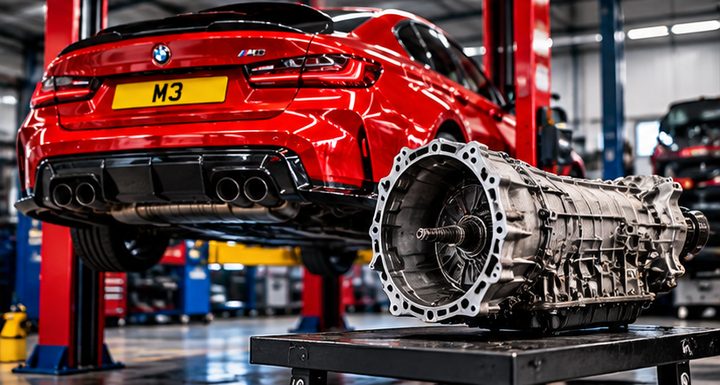
Your gearbox is most likely whining because of worn bearings, worn gear teeth or oil that is low, old or the wrong grade. Because the noise comes from rotating parts that depend on a film of oil, it tends to get louder as wear progresses, so it is worth finding out the cause rather than turning the radio up.
Not every whine comes from the gearbox itself. Drivers often blame the box for noises from the clutch, the wheel bearings or the driveshafts. The questions below help you describe the sound clearly, which makes the diagnosis quicker.
Does the whine change with speed or with the engine?
Pay attention to what controls the pitch. If it rises and falls with road speed whatever gear you are in, the source may be further along the drivetrain, such as a wheel bearing or differential. If it changes when you swap gears and is clearly tied to one or two of them, the gearbox is a stronger suspect.
A useful test on a quiet, safe road is to take note of the sound in neutral with the engine running and the clutch pedal up. Whine in neutral that goes away when you press the clutch pedal can point to input shaft bearings. Whine that is there only under load in a gear suggests the gears in use.
- Pitch follows road speed in every gear: look beyond the gearbox
- Whine in one gear only: often wear on that gear pair
- Whine in neutral that stops with the clutch pressed: often input bearing
- Whine only on the overrun or only under load: tells us about gear contact
Can low gearbox oil cause a whining noise?
Yes. Manual gearboxes rely on oil to lubricate and cool bearings and gears. If the level drops through a leak, or the oil has broken down over many miles, metal-to-metal contact increases and the noise rises. A seal that weeps slowly can leave a gearbox low without any obvious puddle.
Some manufacturers describe the oil as fill-for-life, but that phrase does not mean the oil can never degrade, and recommendations differ between vehicles. Check your handbook, and if the car has covered a high mileage on the original oil, an inspection is worthwhile.
Is it the gearbox, the clutch or something else?
A clutch release bearing can produce a whirring or grumbling sound when the pedal is pressed, and a worn dual-mass flywheel or pilot bearing can give rattles and rumbles at idle. Wheel bearings hum and often change when you steer gently left or right. Tyres with uneven wear can also drone in a way that mimics gearbox noise.
Putting a new part on a hunch can cost time and money without curing the noise.
What does a garage do about a whining gearbox?
We start with the oil level and condition, looking for leaks, signs of metal in the oil and any play in the linkage or mounts. If the oil is low or tired, an oil change or top-up with the correct specification may be the first step, although it will not reverse wear that has already happened.
If bearings or gear surfaces are worn, the gearbox may need to be removed and opened up, or a replacement unit considered. Whether repair or replacement makes sense depends on the vehicle, the extent of damage, the parts available and the labour involved, which is why we give a quote after inspection rather than before.
When should I stop driving?
A mild whine that has been stable for a while is a reason to book an inspection, not to panic. Stop driving if the noise becomes loud and grinding, if you smell burning, if the gearbox starts to jump out of gear or if a gear will not select. Continuing can turn a repairable fault into a broken gearbox.
If you are unsure, say so when you contact us. Describing which gear, what speed and whether the engine is hot or cold gives us a head start.
A whine tells you something inside is wearing, and oil condition is the first thing to check. If you would like it looked at, Automaster at Longcombe Cross near Totnes can inspect the car and give you a quote.
Common questions
Is a whining gearbox dangerous?
The whine itself is a warning rather than a danger, but the wear behind it can progress to a failure. If it worsens quickly, or is joined by grinding or loss of drive, stop driving and get it checked.
Will thicker oil stop a gearbox whining?
Not reliably, and using the wrong grade can cause damage. Use only the specification your handbook or the manufacturer recommends, and ask a garage if you are unsure.
Why is the noise louder when the car is cold?
Cold oil is thicker and takes a moment to reach every part. Some noises fade as the gearbox warms, but a noise that returns every journey is still worth investigating.
Can you tell me the cost over the phone?
Cost depends on the vehicle and on whether the fix is oil, a bearing, or work inside the gearbox. We would need to inspect the car first, then we can explain the options and give a quote.
More advice
Ask for a quote
Tell us the make, model, registration and what the car is doing, and we will come back to you. Prefer to talk? Call our quote line on 01803 862152.
Automaster, Longcombe Cross, Longcombe, Totnes TQ9 6PL, United Kingdom