

Pre-purchase inspection: what to check when buying a second-hand car
Check the paperwork, the MOT history and a cold start yourself, then have a garage look underneath before you hand over any money.
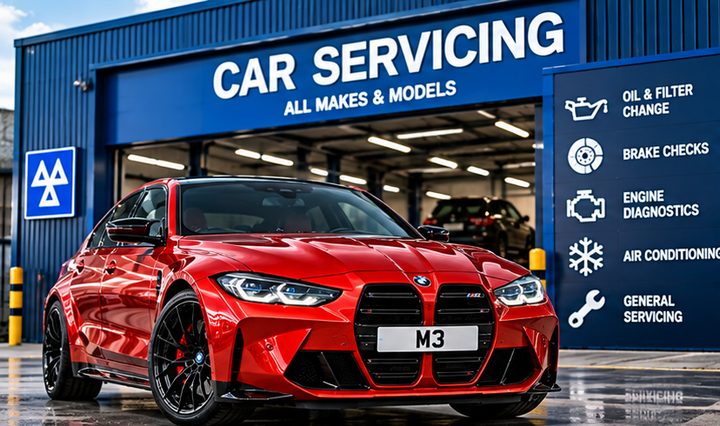
Before you buy a second-hand car, check that the paperwork matches the vehicle, read the MOT history online, see the engine start from cold, take a proper test drive and, if you are serious, pay for an independent inspection on a ramp. A clean exterior tells you very little about what is going on underneath.
This guide covers what you can safely check yourself on a driveway, what a garage can see that you cannot, and the signs that should make you walk away. It applies to petrol and diesel cars with a manual gearbox, which is what we work on at Automaster, a garage at Longcombe Cross near Totnes.
What paperwork should I check before buying a second-hand car?
Start with the V5C registration document. The registration number, VIN and engine number on the document should match the car, and the seller's name and address should match the person in front of you.
Then look at the service history. A stamped book or a folder of invoices shows what has been done and when. Gaps are not always a problem, but they are a reason to ask questions. You can also read the car's MOT history online using the registration number, which shows past passes, failures, advisories and recorded mileage.
- V5C details match the car and the seller
- Service book stamps or itemised invoices
- Online MOT history with advisories read carefully
- Mileage that makes sense against past MOT readings
What can I check myself on the car?
Look at the car in dry daylight. Check panel gaps and paint for signs of poor repair. Check all four tyres for even wear and the legal minimum tread of 1.6 mm across the central three quarters of the tread. Uneven wear can point to alignment or suspension problems.
Open the bonnet with the engine cold. Look for oil or coolant residue around the engine, check the oil level and colour on the dipstick, and look at the coolant reservoir. Milky deposits under the oil filler cap or a sweet smell from the coolant area deserve a closer look by a professional. Press every switch inside.
- Tyre wear even across the tread
- No fresh drips under the car after it has been parked
- Warning lights come on at ignition, then go out after starting
- Seat belts retract and latch properly
What should I look for on a test drive?
Ask for the engine to be cold when you arrive and listen to it start. Heavy rattling, smoke or a warning light that stays on are worth noting.
On the road, check the clutch bites at a sensible point in the pedal travel and that the car does not shudder as you pull away. Every gear should engage cleanly without crunching. Brake firmly in a safe, clear place: the car should stop in a straight line without pulling to one side or a pulsing pedal. On a straight road, the steering should feel settled, and you should not hear knocks over bumps.
Is a garage pre-purchase inspection worth it?
For most buyers, yes, particularly on anything where a repair bill could be large. A garage can put the car on a ramp and look at things you cannot reach: corrosion on the underside and brake lines, worn suspension joints, exhaust condition, leaks from the engine and gearbox, and the state of the brake discs and pads.
What it costs depends on the vehicle and how thorough you want the check to be, so ask for a quote. At Automaster we can talk through what is practical for a particular car. An inspection reports what can be seen on the day. It cannot promise nothing will go wrong later, but it gives you facts to negotiate with.
When should I walk away from a car?
Walk away if the seller will not let you inspect the car properly, if the documents do not match, or if the mileage and service history tell different stories. Pressure to pay a deposit immediately is another warning sign.
Be cautious of any car with signs of overheating, a clutch that slips or judders badly, brakes that pull, or a steering fault. These are safety matters. An MOT is a snapshot of roadworthiness on one day, not a full mechanical check.
Do your own checks first, then let a garage look underneath before you commit. If you would like a pre-purchase look at a car, ask Automaster for a quote or call the quote line.
Book online
Choose a service and book your visit online.
Common questions
Can I check a car's MOT history for free?
Yes. The government provides an online MOT history service where you enter the registration number. It shows previous results, advisories and recorded mileage, which is useful for spotting repeat problems or unusual mileage.
Does a long MOT mean the car is in good condition?
Not necessarily. An MOT checks that key parts meet the legal standard on the day of the test. It does not assess the condition of the engine, clutch or gearbox, so a car can pass and still need work soon.
Should I buy a car with no service history?
It carries more risk because you cannot see what has been maintained. If you still want it, a garage inspection and a service soon after purchase help you find out where it stands. Allow for that in what you offer.
Can a garage inspect a car before I buy it?
Many garages can, but availability and what they include vary. Ask whether the seller will allow it and request a quote. At Automaster, you are welcome to ask what we can do for a particular car.
More advice
Ask for a quote
Tell us the make, model, registration and what the car is doing, and we will come back to you. Prefer to talk? Call our quote line on 01803 862152.
Automaster, Longcombe Cross, Longcombe, Totnes TQ9 6PL, United Kingdom