

Common reasons cars fail an MOT and how to avoid them
Many MOT failures come from small, easy-to-miss items such as a blown bulb or worn tyre, and a few minutes of checking beforehand can catch most of them.
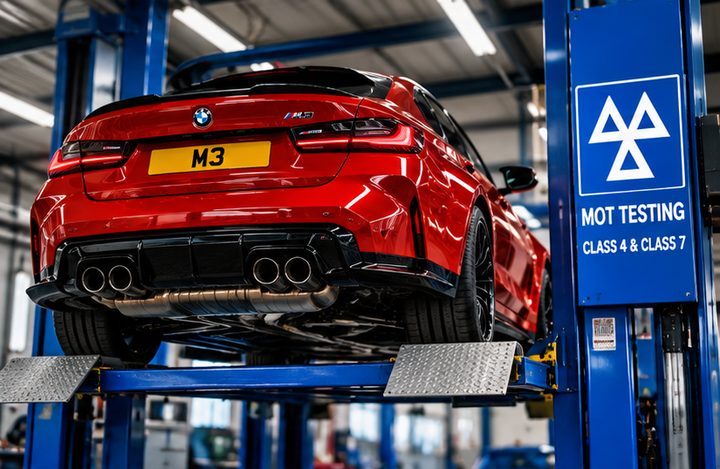
Why do cars fail an MOT? In most cases it is a handful of familiar faults: lights that are not working, tyres worn or damaged, brakes that are uneven or worn, suspension components that have deteriorated, and poor visibility from worn wipers or a damaged windscreen.
Plenty of these are cheap to put right if they are spotted early, and some you can check yourself on the driveway. The rest are the kind of fault a garage finds when the car is on a lift. This guide covers each cause, a safe way to check and what to do about it. We are Automaster, at Longcombe Cross near Totnes.
Why do cars fail an MOT on lights?
Lighting is one of the most frequent reasons for a fail, mainly because a bulb can blow without you noticing. A number plate light, a brake light or a side indicator is easy to miss when you cannot see it from the driver's seat.
Ask someone to stand behind the car while you press the brake pedal, and check the hazard lights to see all indicators flashing together. Headlights must also be aimed correctly and not so cloudy that they cannot throw a clear beam.
- Dipped and main beam headlights
- Brake lights, including the high-level one if fitted
- Front, side and rear indicators
- Rear number plate lights and reversing light
Can worn tyres make a car fail its MOT?
Yes. The legal minimum tread depth is 1.6 mm across the central three-quarters of the tyre, around the entire circumference. Tyres can also fail for cuts, bulges, exposed cords or a mismatch in type on the same axle.
Look at the sidewalls as well as the tread, because damage from kerbs is common. Check the pressures against the figures in your handbook. A tyre that is nearly at the limit can be below it by test day, so it is sensible to replace it early.
What brake faults cause an MOT fail?
Brakes fail on efficiency, balance or condition. That might be a car that does not stop well enough, a large difference between the left and right side of an axle, a seized caliper, a corroded brake pipe, or a handbrake that cannot hold the car.
Warning signs include a pull to one side when braking, a soft or sinking pedal, grinding noises, or a handbrake that needs a very long pull. If any of these are present, have the brakes inspected before booking the test, and do not keep driving if the car does not stop properly.
What suspension, steering and visibility problems fail a car?
Worn ball joints, split gaiters, leaking shock absorbers, broken springs and damaged anti-roll bar links are regular causes of a fail. They tend to show up as knocking over bumps, vague steering or uneven tyre wear.
On visibility, wipers that smear or leave areas unwiped, empty washer bottles and chips or cracks in the driver's line of sight can all cause a defect. Topping up the screenwash and replacing tired wiper blades is something most drivers can do themselves.
What do emissions, warning lights and other defects cost you at the test?
Emissions failures can come from a worn catalytic converter, a sensor fault or a car that has not been serviced. Diesel cars can fail for smoke or for a missing or tampered particulate filter. A lit engine management or ABS warning light can also cause a fail, and it usually needs diagnostic work to trace.
The cost of putting things right depends on the part, how accessible it is and how long the job takes, so we only give a quote once we know what is wrong. If you have had a fail elsewhere, bring the paperwork and ask us about the repairs. Please do not drive a car with a dangerous defect.
Most MOT failures are avoidable with a short check of lights, tyres, wipers and brakes. If you would like us to test or inspect your car, ask for a quote at Automaster.
Book online
Choose a service and book your visit online.
Common questions
What is the most common reason for an MOT failure?
Lighting and signalling faults are among the most common, followed by tyres, brakes and suspension. Bulbs are the easiest to check for yourself before the test.
Can I fix a fault myself before the test?
Simple jobs such as replacing a bulb, wiper blades or topping up screenwash are fine for many drivers. Anything involving brakes, steering or suspension should be handled by a competent garage.
Can a small crack in the windscreen fail an MOT?
It can, depending on its size and position. Damage in the driver's central view of the road is judged strictly, while smaller chips elsewhere may only be an advisory.
What happens if my car fails its MOT?
You will be given a list of the defects. If any are dangerous you should not drive the car. Ask us about repair and retest options, as the rules depend on when and where the work is done.
More advice
Ask for a quote
Tell us the make, model, registration and what the car is doing, and we will come back to you. Prefer to talk? Call our quote line on 01803 862152.
Automaster, Longcombe Cross, Longcombe, Totnes TQ9 6PL, United Kingdom